

A mushroom tea latte is a strong, concentrated brew of mushroom tea topped with steamed or frothed milk, finished with a little spice or sweetness. The smoothest version starts with a tea bag rather than a loose powder: a blend with a high share of fruiting body mushrooms, steeped briefly in a small amount of hot water, then combined with warm milk. That gives you a creamy, caffeine-free cup with no grit at the bottom. Our Lion’s Mane Botanical Tea and Reishi Mushroom Tea are both made with 40% fruiting body mushrooms, so they work well as the base of a latte.
TL;DR
- A mushroom tea latte is a concentrated mushroom tea plus frothed milk. Use a small amount of water so the flavour holds up against the milk.
- Tea bags give a smooth cup without the sediment you get from stirring in powder.
- Lion’s mane suits cinnamon, cacao and oat milk. Reishi suits deeper, cosier flavours such as cacao, vanilla and warming spice.
- A latte made with mushroom tea is naturally caffeine-free. Mushroom coffee is a different drink and still contains coffee.
- Mushroom drinks are not for everyone. If you are pregnant, take medication or have a medical condition, check with your GP or pharmacist first.
Table of Contents
- What a mushroom tea latte actually is
- Why use tea bags for a latte
- The basic mushroom tea latte method
- Which milk works best
- Lion’s mane latte
- Reishi latte
- Mushroom chai latte
- Making it part of a routine
- What mushroom lattes can and cannot promise
- Ready to try your first latte
- FAQ
- Sources
What a mushroom tea latte actually is
The phrase covers three quite different drinks, and it helps to know which one you are making.
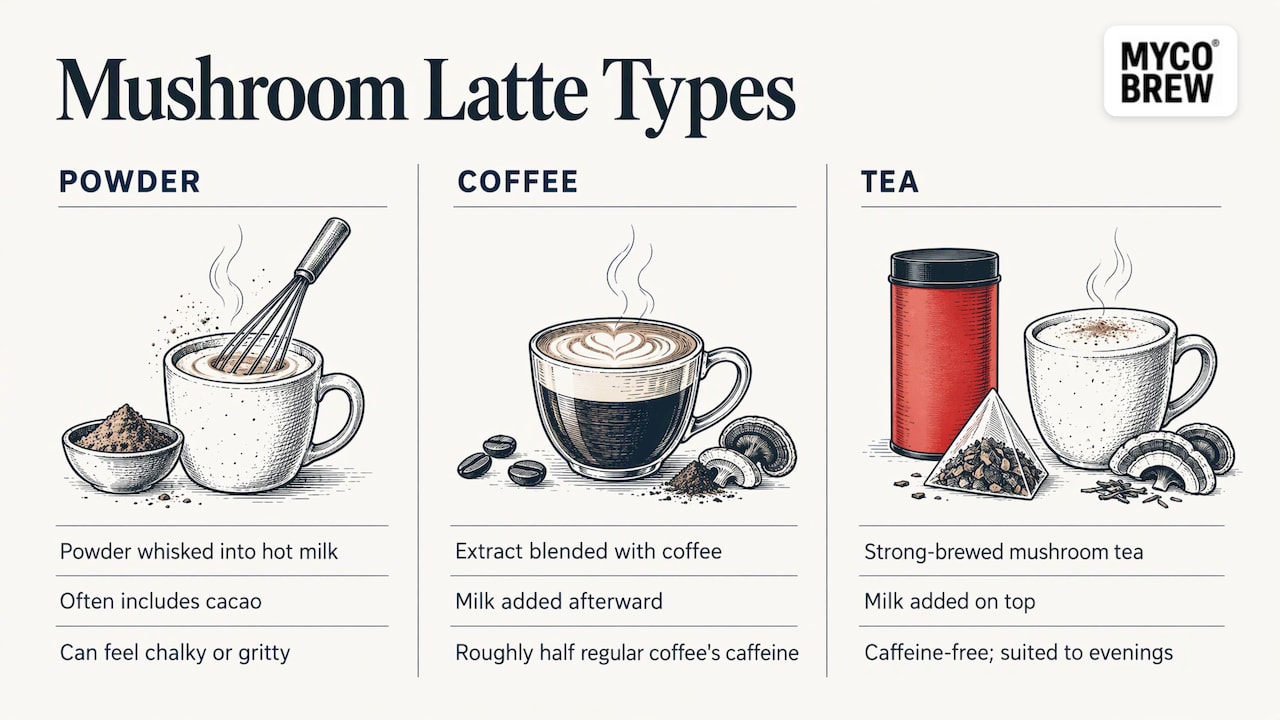
A mushroom powder latte. Mushroom powder is whisked into hot milk, often with cacao. Recipes online typically use around a teaspoon of powder to 250 ml of dairy or oat milk, heated until steaming, with a little sweetener, cinnamon and vanilla (The Wander Plate). It works, but powders can leave a slightly chalky or gritty texture unless you froth hard.
A mushroom coffee latte. Mushroom extract is blended with coffee, then milk is added. Because the mushroom powder dilutes the coffee, this style has roughly half the caffeine of regular coffee, according to a clinical dietitian quoted by Women’s Health UK. It is lower in caffeine, not caffeine-free.
A mushroom tea latte. A botanical tea built on mushrooms is brewed strong, then topped with milk. Our teas are naturally caffeine-free, so this is the version you can drink in the evening. If you want to know more about what is in the cup, our guide to mushroom tea and caffeine covers it.
The third is the one this article is about, and it is the easiest to get right at home.
Why use tea bags for a latte
Most mushroom latte recipes ask you to measure powder, whisk it and hope it dissolves. A tea bag changes three things.
- Texture. The mushrooms and botanicals stay in the bag, so the cup is clear of sediment. That matters when milk is already giving you body.
- Measure. One bag is one serving. There is no spoon to level and no clumps to chase.
- Flavour balance. Our blends combine the mushrooms with aromatic botanicals so the taste is smooth rather than dominated by mushroom notes. Milk and a little spice then round it out instead of masking it.
Our teas come in biodegradable pyramid tea bags, which give the ingredients room to move in the water. That is useful when you are brewing in a small amount of liquid.
It is also a mild, approachable way in. A March 2024 analysis in The Grocer, citing YouGov data, found that nearly half of UK consumers know nothing about the functional use of mushrooms, and that hot-drink launches featuring them remain uncommon (The Grocer). If the idea of a mushroom drink still feels unfamiliar, a creamy latte that tastes of cinnamon and cacao is an easy first step. For more on what to expect, see our plain guide to what mushroom tea tastes like.
The basic mushroom tea latte method
This is the routine we would give a friend. It makes one large mug.
What you need
- 1 MycoBrew tea bag (Lion’s Mane or Reishi to start)
- About 80 to 100 ml of just-boiled water, so the brew is concentrated
- 150 to 200 ml of milk or plant milk
- Optional: a small spoon of honey or maple syrup, a pinch of cinnamon, a drop of vanilla extract
- A small milk frother, a whisk or a jar with a lid
Steps
- Brew the concentrate. Put the tea bag in a mug and pour over the hot water. Use less water than you would for a normal cup, because milk will dilute the flavour. Brewing time depends on the blend, so check our steep time guide for mushroom tea rather than guessing. Cover the mug to keep the heat in.
- Heat the milk. Warm it until steaming, not boiling. Boiled milk tastes flat, and oat and other plant milks can split when overheated.
- Froth. Use a frother, a hand whisk, or shake the hot milk in a tightly closed jar (hold it with a cloth) for 20 seconds. You want a light foam, not stiff peaks.
- Remove the bag and combine. Lift out the bag, pressing it gently against the side of the mug. Pour in the milk, spooning the foam on top.
- Finish. Add sweetener while the drink is hot so it dissolves. Dust with cinnamon or cacao.
Where it goes wrong
- Too much water. A full 250 ml mug of tea with a splash of milk is a milky tea, not a latte. Keep the brew small and the milk generous.
- Milk too hot. Overheated milk dulls the botanicals and can curdle with acidic ingredients.
- Squeezing the bag hard. It can make the cup taste harsher. A gentle press is enough.
- Too much sugar. The botanicals already bring natural sweetness and aroma. Start with half a teaspoon and adjust.
Which milk works best
| Milk | What it adds | Good with |
|---|---|---|
| Oat milk | Creamy, slightly sweet, froths well | Lion’s mane, cinnamon, chai spices |
| Whole dairy milk | Rich body, stable foam | Reishi, cacao, vanilla |
| Almond milk | Light, nutty | Lighter, floral blends |
| Coconut milk | Round, tropical sweetness | Cacao, vanilla |
Barista-style plant milks are built to hold foam and resist splitting, so they are worth buying if you make lattes often.
Lion’s mane latte
Lion’s mane is the most-searched mushroom for lattes, and it is a gentle place to start. Its flavour is mild, slightly sweet and a little savoury, which is why it takes well to cinnamon, cacao and coconut sugar. Nature’s Root, a UK supplement retailer, suggests the same pairings in its own lion’s mane latte guidance, and they match what we find works at home.
Our Lion’s Mane Botanical Tea is the blend we formulate for focus and clarity, so it suits a morning or mid-afternoon latte when you want a calm, clear-headed alternative to another coffee.
Our suggested build
- 1 Lion’s Mane tea bag brewed in about 90 ml hot water
- 150 ml frothed oat milk
- A pinch of cinnamon
- Half a teaspoon of maple syrup or honey
If you want to know what lion’s mane can reasonably do for your day, read our piece on mushroom tea for focus.
A café-style variation
If you like the look and ritual of a coffee shop drink but want to ease off caffeine, skip the coffee altogether. Brew the tea concentrate as above, froth the milk a little more generously, and add a pinch of cacao on top. The result looks like a flat white and drinks like a warm, lightly spiced milky tea.
Reishi latte
Reishi is the evening mushroom. We formulate our Reishi Mushroom Tea for rest and relaxation, and because it is naturally caffeine-free, it fits the end of the day when a normal latte would not.
Reishi lattes suit richer, cosier flavours. Think of a hot chocolate in spirit:
- Stir half a teaspoon of cacao powder into the hot concentrate before adding milk.
- Add a few drops of vanilla extract.
- Use whole milk or a creamy oat milk, warmed gently.
- Finish with cinnamon, nutmeg or a little ground ginger.
Balance the flavour by adding sweetness and fat together. A little honey and a creamy milk soften any earthy edge far better than extra sugar alone. Keep the water small and the brew concentrated, as with every latte in this article.
Our suggested build
- 1 Reishi tea bag brewed in about 90 ml hot water
- 150 ml warm whole or oat milk
- Half a teaspoon of cacao
- A drop of vanilla and a pinch of cinnamon
Mushroom chai latte
Chai is the natural partner for a mushroom latte. Spices such as cinnamon, cardamom, ginger and clove bring warmth and aroma that sit comfortably beside the earthy depth of mushrooms. If you like a spiced cup, our guide to mushroom chai shows what makes a good one. To turn it into a latte, brew your mushroom tea strong, add a pinch of ground chai spices to the milk as it heats, and froth as usual.
Making it part of a routine
A latte takes five minutes, and that is part of the point. Many of the people who try mushroom drinks are looking for a calmer replacement for a second or third coffee, or a way to mark a pause in a busy day.
- Morning: Lion’s mane latte in place of your usual flat white.
- Mid-afternoon: A smaller lion’s mane or Maitake latte when energy dips and you would normally reach for caffeine. Our Maitake Botanical Tea is another blend you can try in the same way.
- Evening: Reishi latte with cacao and vanilla, before the screen goes off.
If you are cutting back on coffee more broadly, our guide to caffeine-free coffee alternatives lays out the options.
What mushroom lattes can and cannot promise
People ask what a mushroom latte is good for. The honest answer is that it is a flavourful, caffeine-free drink that makes a pleasant daily ritual, built around ingredients with a long history in wellness cooking. Our guide to mushroom tea benefits explains what the evidence shows and what to expect, so you can set sensible expectations rather than chase miracles.
One point of good practice: pick your mushrooms with the species in mind. Some mushrooms carry specific cautions. Chaga, for instance, is high in oxalates, and the Cleveland Clinic notes a kidney-stone risk for people prone to them. A deeper look at that is in this guide to chaga benefits, dosage and oxalate caution. Our blends use Lion’s Mane, Reishi, Shiitake, Maitake and Agaricus.
Who should check first
As with any herbal drink, speak to your GP or pharmacist before you start if you:
- are pregnant or breastfeeding;
- take prescription medication, especially anything for blood clotting, blood pressure or blood sugar;
- have an upcoming operation;
- have a medical condition, or a known allergy or sensitivity to mushrooms or fungi.
If you notice any reaction, stop drinking it and speak to a pharmacist or your GP.
Perspective
We built MycoBrew around a simple idea: a mushroom drink should taste good enough that you want it every day. That is why our blends use 40% fruiting body mushrooms alongside aromatic botanicals, so you get a smooth, non-gritty cup where the mushroom is present without taking over.
A latte is where that matters most. Milk is unforgiving. A thin or gritty base disappears or sours, while a balanced, well-sourced tea gives you a clean concentrate to build on. Our teas are organic, crafted in the UK, lab-tested and caffeine-free, and they come in biodegradable pyramid bags, so a latte is just a short, strong brew and some warm milk.
We think the best wellness habits are the ones you look forward to. A lion’s mane latte in the morning and a reishi latte at night is a ritual you can keep.
Leroy
Ready to try your first latte
If you want to make the lattes above, start with the blend that matches your time of day: Lion’s Mane for a clear-headed morning, Reishi for winding down. Each is a naturally caffeine-free botanical tea made with 40% fruiting body mushrooms, and you can order one-off or choose a subscription with a discount for recurring delivery. See the full range at MycoBrew.
FAQ
Can you make a latte with mushroom tea?
Yes. Brew one tea bag in a small amount of hot water, about 80 to 100 ml, so the flavour is concentrated. Then add 150 to 200 ml of frothed warm milk or plant milk. Sweeten and spice to taste.
Does a mushroom tea latte contain caffeine?
A latte made from our mushroom teas is naturally caffeine-free, because the tea itself contains none. Mushroom coffee is different: it still contains coffee, with roughly half the caffeine of a regular cup according to Women’s Health UK.
Which milk is best for a mushroom latte?
Oat milk is a favourite for lion’s mane because it is creamy, slightly sweet and froths well. Whole dairy milk gives a richer body for reishi and cacao. A barista-style plant milk is the most reliable choice if you want stable foam.
When is the best time to drink a mushroom latte?
It is up to you, as the drink is caffeine-free. We formulate Lion’s Mane for focus, so many people enjoy it in the morning or early afternoon, and Reishi for relaxation, so it suits the evening.
Who should check with a professional first?
Anyone who is pregnant or breastfeeding, takes prescription medicines, has a medical condition or is due for surgery should speak to their GP or pharmacist before adding a mushroom drink to their routine.
Sources
- Mushroom coffee: everything you need to know, Women’s Health UK
- Lion’s Mane Latte Recipe, The Wander Plate
- Functional mushrooms ready to take wellness market by storm, The Grocer
- Mushroom Coffee: What It Is and Benefits, Cleveland Clinic
- Chaga Mushroom Benefits, Dosage & Oxalate Caution


